Introduction
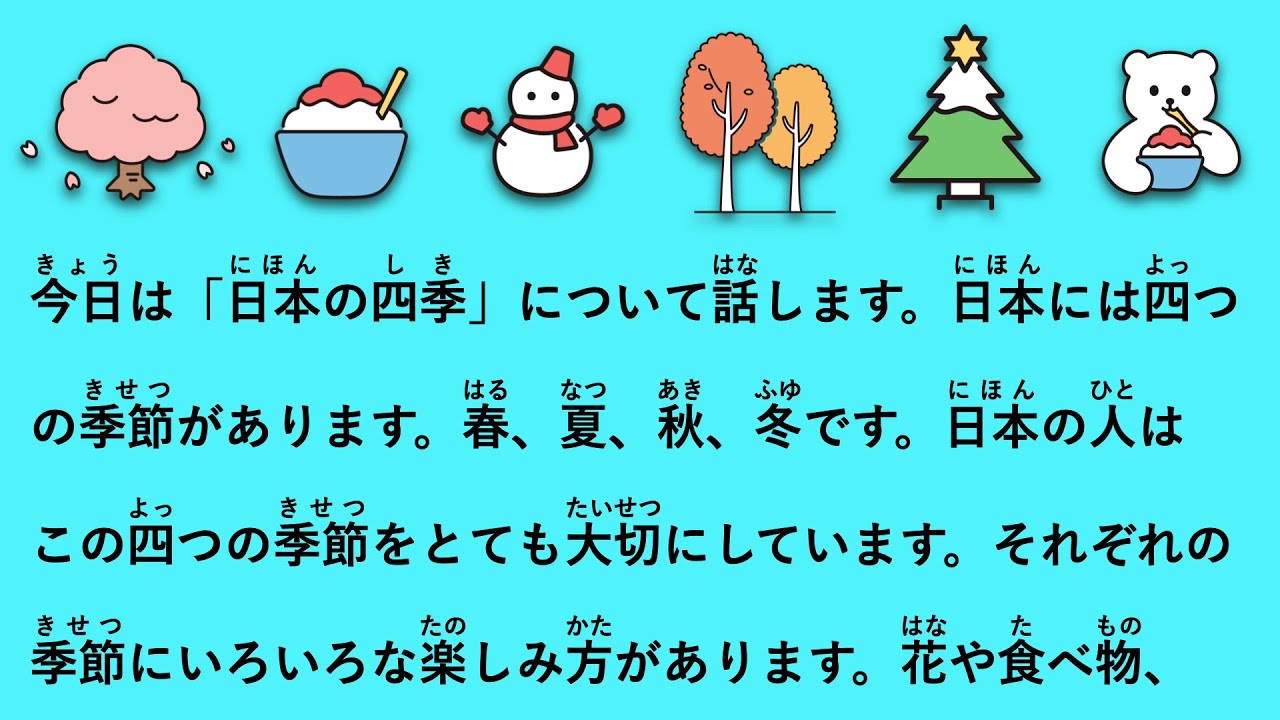
Japan's culture is built around seasons. From the way people greet each other to what they eat for dinner, 四季 (shiki — the four seasons) shape nearly every aspect of daily life. If you've ever wondered why your Japanese textbook suddenly starts talking about cherry blossoms or why your language exchange partner keeps mentioning 紅葉 (kōyō — autumn leaves), this is why.
Understanding seasonal vocabulary isn't just a nice bonus — it's essential for sounding natural. Japanese people change their greetings, food choices, and even their stationery based on the time of year.
Quick Answer
Quick Answer: Japanese culture deeply ties to its four seasons (四季). Learning seasonal greetings like 暑中お見舞い申し上げます (summer) and seasonal vocabulary like 花見 (spring), 花火 (summer), 紅葉 (fall), and 初詣 (winter) will make your Japanese sound far more natural and culturally aware.
Why Seasons Matter So Much in Japanese Culture
In English, you might say "nice weather" year-round. In Japanese, there's a specific greeting for nearly every month. This isn't random — it reflects a cultural worldview where nature and daily life are deeply connected.
This shows up everywhere:
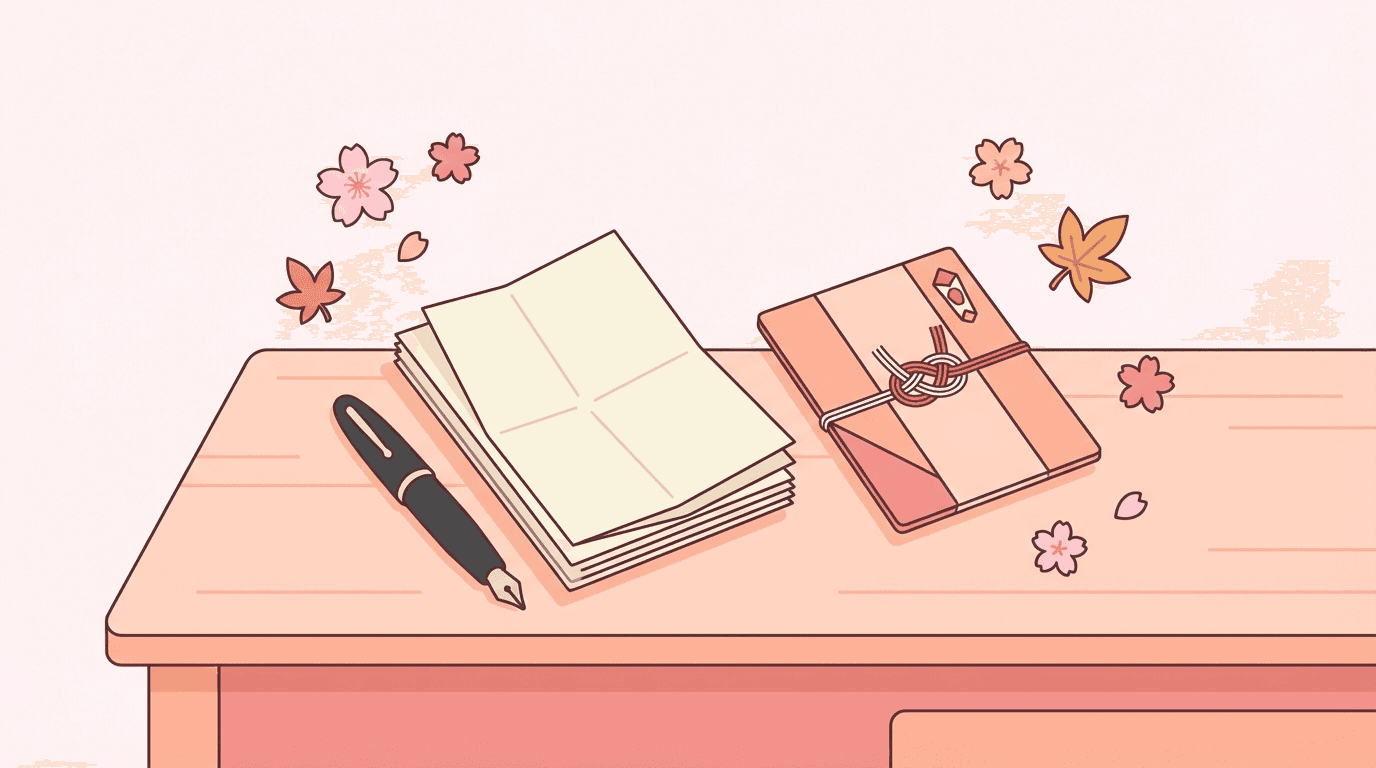
- Greetings and letters — Seasonal references open most formal letters and emails
- Food — Seasonal dishes (旬の食べ物, shun no tabemono) are a point of pride
- Poetry — Haiku requires a 季語 (kigo, seasonal word) to be considered complete
- Events — Major festivals align with seasonal changes
If you're preparing for JLPT N3 or studying intermediate Japanese, seasonal vocabulary appears frequently in reading comprehension passages. Our JLPT N3 Study Workbook covers many of these cultural topics.
春 (Haru) — Spring Vocabulary
Spring in Japan (roughly March–May) is all about renewal and new beginnings. The school year and fiscal year both start in April.
Key vocabulary:
- 桜 (sakura) — cherry blossoms, Japan's unofficial national flower
- 花見 (hanami) — cherry blossom viewing parties
- 入学式 (nyūgakushiki) — school entrance ceremony
- 花粉症 (kafunshō) — hay fever (a very real spring struggle)
- ひな祭り (Hina Matsuri) — Doll's Day / Girls' Day (March 3)
- 春分の日 (Shunbun no Hi) — Spring Equinox Day
Spring greeting: お花見の季節になりました。(Ohanami no kisetsu ni narimashita.) — Cherry blossom season has arrived.
夏 (Natsu) — Summer Vocabulary
Summer (June–August) brings heat, humidity, and some of Japan's most exciting events.
- 花火 (hanabi) — fireworks
- 花火大会 (hanabi taikai) — fireworks festival
- お盆 (Obon) — Festival of the Dead, a major holiday in August
- かき氷 (kakigōri) — shaved ice dessert
- 梅雨 (tsuyu) — rainy season (June–July)
- 浴衣 (yukata) — lightweight summer kimono
- 蝉 (semi) — cicadas (the sound of Japanese summer)
Summer greeting: 暑中お見舞い申し上げます。(Shochū omimai mōshiagemasu.) — Summer greetings. (Used in cards and letters during the hottest period.)
秋 (Aki) — Fall Vocabulary
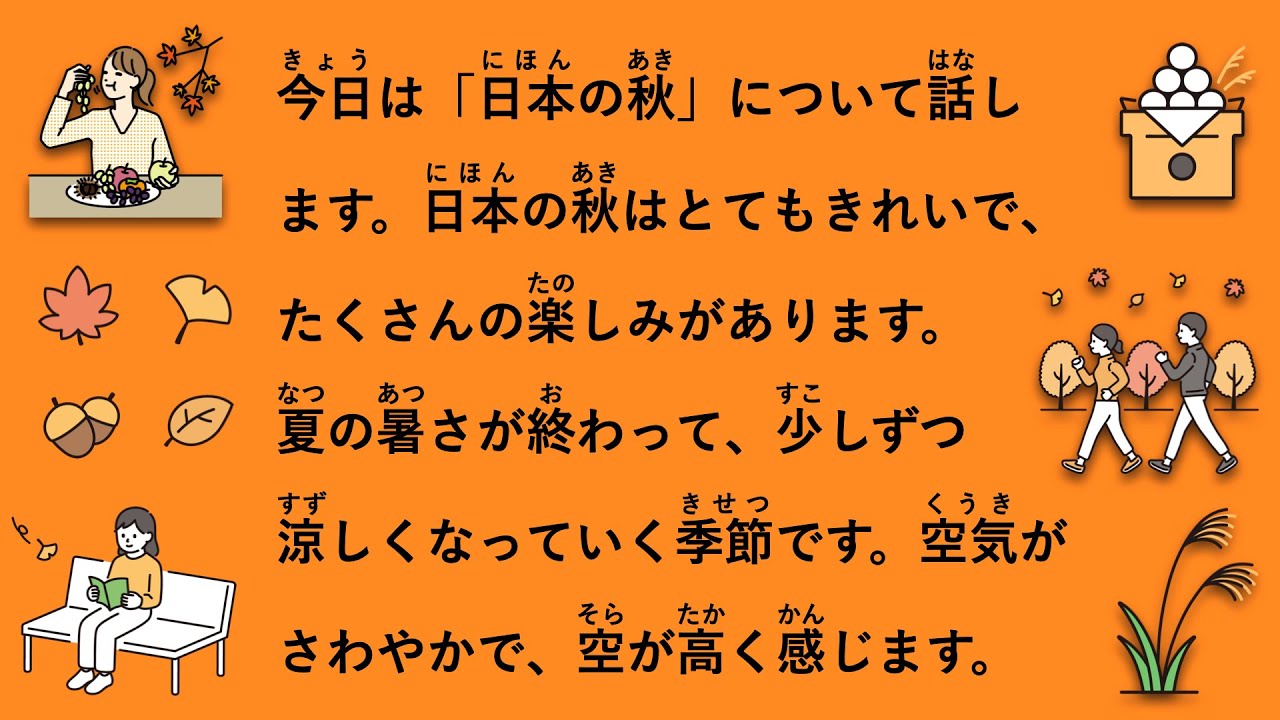
Fall (September–November) is considered Japan's most beautiful season by many.
- 紅葉 (kōyō / momiji) — autumn leaves / red maple leaves
- 紅葉狩り (momijigari) — autumn leaf viewing
- 食欲の秋 (shokuyoku no aki) — "appetite of autumn" (fall harvest season)
- 読書の秋 (dokusho no aki) — "reading autumn" (a cozy season for books)
- お月見 (otsukimi) — moon viewing
- 七五三 (Shichi-Go-San) — festival for children ages 3, 5, and 7
Fall greeting: 秋も深まってまいりました。(Aki mo fukamatte mairimashita.) — Autumn has deepened.
For a deeper dive into autumn expressions, check out our YouTube lesson on fall vocabulary.
冬 (Fuyu) — Winter Vocabulary
Winter (December–February) centers around warmth, togetherness, and New Year traditions.
- 初詣 (hatsumōde) — first shrine visit of the new year
- お正月 (Oshōgatsu) — New Year
- 年賀状 (nengajō) — New Year greeting cards
- おせち料理 (osechi ryōri) — traditional New Year food
- 鍋 (nabe) — hot pot dishes
- こたつ (kotatsu) — heated table with blanket
- 雪 (yuki) — snow
Winter greeting: 寒くなりましたね。お体に気をつけてください。(Samuku narimashita ne. Okarada ni ki o tsukete kudasai.) — It's gotten cold, hasn't it? Please take care of yourself.
Seasonal Greetings (時候の挨拶) by Month
Japanese formal letters and business emails begin with seasonal greetings called 時候の挨拶 (jikō no aisatsu). Here are common ones:
| Month | Greeting | Meaning |
|---|---|---|
| January | 新春の候 (Shinshun no kō) | In the season of new spring |
| April | 桜花の候 (Ōka no kō) | In the cherry blossom season |
| July | 盛夏の候 (Seika no kō) | In the height of summer |
| October | 秋涼の候 (Shūryō no kō) | In the cool of autumn |
| December | 師走の候 (Shiwasu no kō) | In the busy December season |
You don't need to memorize all of them — but knowing they exist helps you understand formal Japanese writing.
季語 (Kigo) — Seasonal Words in Poetry
Haiku and other traditional Japanese poetry require a 季語 (kigo) — a word that signals the season. Some aren't obvious:
- 蛙 (kawazu/kaeru) — frog → spring
- 蝉 (semi) — cicada → summer
- 月 (tsuki) — moon → autumn
- 雪 (yuki) — snow → winter
- 風鈴 (fūrin) — wind chime → summer
This tradition is still alive. You'll see kigo in modern haiku, greeting cards, and even in some business writing.
Example Sentences
| Japanese | Romaji | English |
|---|---|---|
| 今年の桜は早く咲きましたね。 | Kotoshi no sakura wa hayaku sakimashita ne. | The cherry blossoms bloomed early this year. |
| 梅雨に入ったので、毎日雨です。 | Tsuyu ni haitta node, mainichi ame desu. | The rainy season started, so it rains every day. |
| 秋は紅葉がきれいです。 | Aki wa kōyō ga kirei desu. | The autumn leaves are beautiful in fall. |
| お正月に初詣に行きました。 | Oshōgatsu ni hatsumōde ni ikimashita. | I went to the first shrine visit on New Year's. |
| 花火大会に浴衣を着て行きたいです。 | Hanabi taikai ni yukata o kite ikitai desu. | I want to wear a yukata to the fireworks festival. |
| 食欲の秋で、毎日食べすぎています。 | Shokuyoku no aki de, mainichi tabesugite imasu. | It's autumn appetite season, so I'm overeating every day. |
Common Mistakes
- Using 紅葉 wrong — 紅葉 (kōyō) means autumn foliage in general; 紅葉 (momiji) specifically means red maple leaves. Both use the same kanji but the reading matters.
- Mixing up 花見 and 花火 — 花見 (hanami) is cherry blossom viewing (spring); 花火 (hanabi) is fireworks (summer). They look similar in writing but are completely different events.
- Forgetting seasonal greetings — Starting a formal letter without a seasonal reference feels abrupt to Japanese readers. Always include one.
- Using summer greetings year-round — 暑中お見舞い is only appropriate during the hottest part of summer (mid-July to mid-August). Using it in September sounds strange.
Tips for Speakers of Other Languages
Learning Japanese seasonal culture and vocabulary can feel different depending on your native language. Here are specific tips:
For Korean speakers (한국어 화자) Korea also has a strong four-seasons culture with similar seasonal events and formal letter greetings. Many seasonal kanji are shared (桜/벚꽃 for cherry blossom, 雪/눈 for snow), so the concepts translate well. Focus on the specifically Japanese events like 花見 and 初詣 that don't have direct Korean equivalents.
For Chinese speakers (中文母语者) Chinese culture also values seasons and has formal seasonal letter greetings (时候语), so the concept of 時候の挨拶 will feel familiar. Many 季語 are written in kanji you'll recognize — but note that readings differ entirely (紅葉 is kōyō/momiji in Japanese, not hóngyè). Leverage your kanji knowledge but always check the readings.
For Vietnamese speakers (Người nói tiếng Việt) Vietnam has two main seasons (dry and rainy) rather than four distinct ones, so Japan's deeply four-season culture may feel quite different. Focus on the cultural context behind each season — understanding why 花見 is emotionally significant in spring helps the vocabulary stick far better than rote memorization.
For Spanish speakers (Hablantes de español) Spanish-speaking cultures also have rich seasonal celebrations (Christmas, Semana Santa, harvest festivals), making it easier to connect emotionally with the Japanese seasonal calendar. The structure of formal seasonal greetings in Japanese is somewhat like formal Spanish letter openings, just more codified and season-specific.
For Indonesian speakers (Penutur bahasa Indonesia) Indonesia's tropical climate means four distinct seasons are unfamiliar, which makes Japan's season-based culture particularly fascinating but also more abstract. Try connecting 梅雨 (rainy season) to Indonesia's rainy season as a starting anchor, then build outward to the other seasons.
Practice Tips
- Write seasonal diary entries — Each week, write 3–5 sentences about the current season using new vocabulary. Try our correction service to get feedback from a native speaker.
- Follow Japanese social media — Japanese Twitter and Instagram users frequently post about seasonal events. It's real, current vocabulary in context.
- Try writing haiku — Pick a 季語 and write a simple 5-7-5 haiku. It forces you to think about seasonal associations.
- Watch seasonal YouTube content — Our YouTube lessons on seasonal topics use these expressions in natural conversation.
- Match vocabulary to your calendar — Learn spring words in spring, summer words in summer. The real-world context makes them stick.
Real Learner Insights
Based on common patterns we see among Japanese learners:
- The "aha" moment: Many learners connect deeply with seasonal vocabulary the first time they use a seasonal greeting in a real context — like writing 暑中お見舞い申し上げます in a card during a Japanese summer. The response from native speakers ("You know that phrase?!") makes the vocabulary unforgettable.
- Common confusion point: Learners often mix up 花見 (cherry blossom viewing in spring) and 花火 (fireworks in summer) because both start with 花. The trick: 花見 ends in 見 (to look) and 花火 ends in 火 (fire). Breaking down the kanji stops the confusion immediately.
- What works: Rather than studying all seasons at once, focus deeply on the current season and learn those words in real time. Studying 桜 while cherry blossoms are actually blooming — even via Japanese social media or YouTube — creates emotional memory that textbook study alone cannot replicate.
Frequently Asked Questions
Q: How many seasonal words do I need to know for JLPT? For N3, you should know the major seasonal events and common greetings. Expect 10–20 seasonal terms in reading passages. For N2 and above, knowledge of 時候の挨拶 becomes more important.
Q: Do Japanese people really change greetings by season? Yes, especially in formal writing like business emails, letters, and speeches. In casual conversation, people reference the season constantly — "It's gotten cold!" or "The cherry blossoms are blooming!" are everyday small talk.
Q: What's the difference between 紅葉 read as "kōyō" and "momiji"? 紅葉 (kōyō) refers to autumn foliage in general — leaves of any tree changing color. 紅葉 (momiji) specifically means Japanese maple leaves or the act of viewing red leaves.
Q: Is there a season that's most important culturally? All four are important, but New Year (お正月) is arguably the biggest cultural event. Spring (cherry blossom season) is the most internationally famous. The Japanese phrase 花鳥風月 (kachō fūgetsu — flowers, birds, wind, moon) captures the deep cultural appreciation for all seasons.
Q: Do Korean and Japanese seasonal greetings work the same way? They are structurally similar — both cultures have formal seasonal greeting phrases used in letters — but the specific expressions are different. Korean has its own system, and many seasonal events (like 初詣 or 花見) are uniquely Japanese. The cultural sensitivity to seasons is shared, but the vocabulary must be learned separately.
Q: Can knowing Chinese kanji help me learn Japanese seasonal words? Yes — many seasonal kanji are recognizable (桜, 雪, 月, 風). However, readings differ completely. 紅葉 in Chinese is hóngyè, but in Japanese it's こうよう (kōyō) or もみじ (momiji). Use kanji recognition as a starting point, but always verify the Japanese reading.
Related Resources
- Watch our YouTube lessons on seasonal Japanese — Lessons covering 四季 and seasonal events
- JLPT N3 Study Workbook — Includes seasonal vocabulary and cultural reading passages
- JLPT N4 Study Workbook — Beginner seasonal expressions and vocabulary
- Get feedback on your Japanese writing — Practice seasonal greetings with native speaker corrections