Introduction
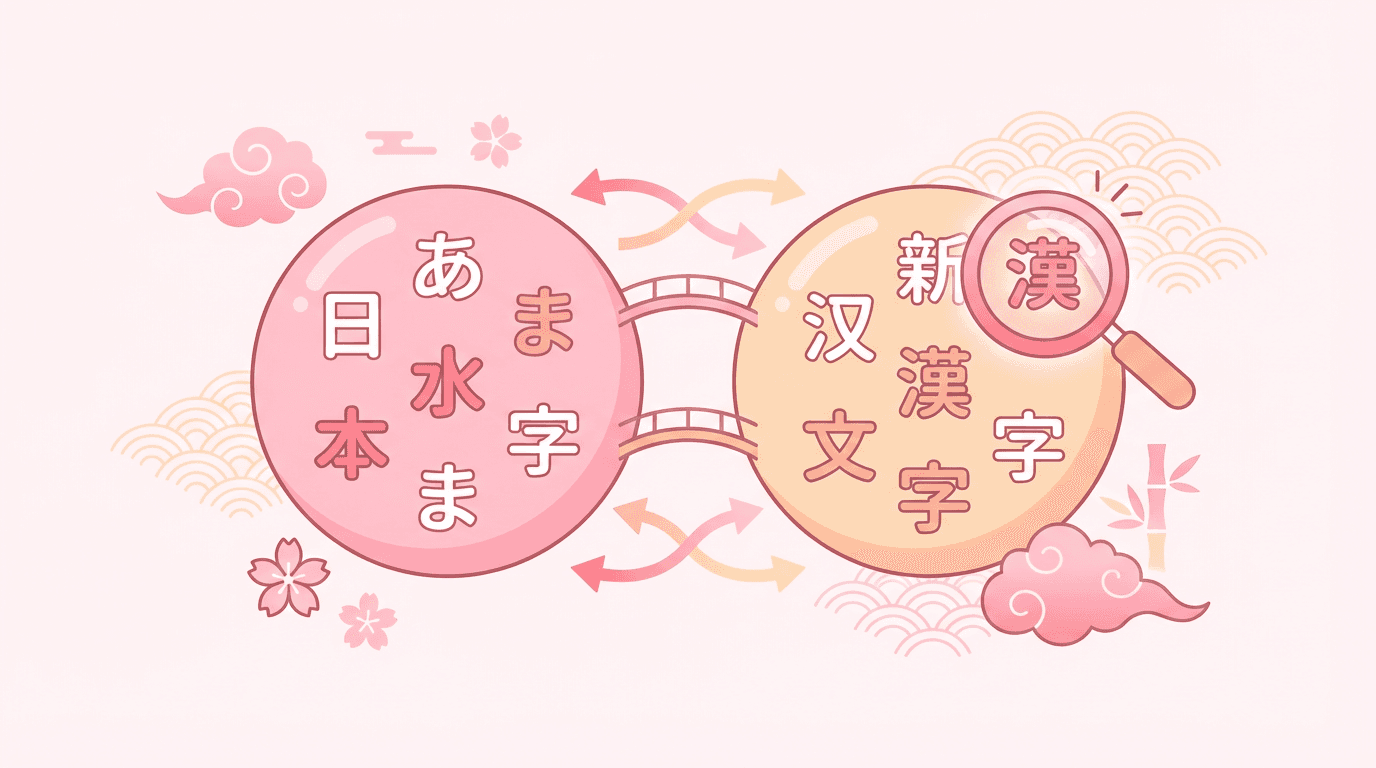
If you speak Chinese and you're learning Japanese, kanji gives you a massive head start. You can walk into a Japanese bookstore, glance at headlines, and get the gist. Menus make sense. Street signs are readable. It feels like a superpower — until it isn't.
The problem is false friends (偽友, giyuu): words written with the same kanji in both languages that mean something completely different. These aren't rare curiosities — they show up in everyday conversation, on restaurant menus, in business emails, and on JLPT exams. And because they look so familiar, they create some of the most embarrassing misunderstandings a Chinese-speaking learner can experience.
This guide catalogs 30+ of the most common and dangerous Japanese-Chinese false friends, organized by category, with real-world usage examples and clear explanations of how the meanings diverge. Whether you're preparing for the JLPT or living in Japan, knowing these words will save you from confusion — and some very awkward moments.
How False Friends Develop
Before diving into the list, it helps to understand why the same kanji can mean different things across languages.
Historical divergence. Japanese borrowed thousands of Chinese words (漢語, kango) over centuries, but languages evolve independently. A word borrowed in the 8th century may have shifted meaning in Japanese while keeping its original sense in Chinese — or vice versa. It's similar to how English "actual" and Spanish "actual" diverged (English = real; Spanish = current).
Semantic narrowing and broadening. Some words kept part of their original meaning but lost others. Japanese 勉強 (benkyou) narrowed from the broader Chinese meaning of "to force/compel" to specifically mean "to study." Chinese 勉强 (miǎnqiǎng) retains the original "reluctant/barely adequate" sense.
Japanese coinages using Chinese characters. Japan created many compound words (和製漢語, wasei kango) using Chinese characters in combinations that don't exist in Chinese, or that carry different meanings. These were sometimes re-borrowed into Chinese with yet another meaning shift.
Category 1: Daily Life Words
These false friends appear in everyday situations and cause the most frequent misunderstandings.
| Kanji | Japanese Meaning | Chinese Meaning | Danger Level |
|---|---|---|---|
| 勉強 | Study, learning | Reluctant, barely adequate | High |
| 大丈夫 | OK, all right, fine | A real man, manly | High |
| 丈夫 | Healthy, sturdy | Husband | High |
| 切手 | Postage stamp | Amputation | High |
| 汽車 | Train (steam) | Automobile, car | High |
| 手紙 | Letter (mail) | Toilet paper | Very High |
| 新聞 | Newspaper | News (general) | Medium |
| 階段 | Stairs, staircase | Stage, phase | Medium |
| 老婆 | Old woman | Wife | High |
| 娘 | Daughter | Mother | Very High |
Deep Dive: The Most Embarrassing Ones
手紙 (tegami) might be the most famous false friend between Japanese and Chinese. In Japanese, it means "letter" (as in mail). In Chinese, 手纸 (shǒuzhǐ) means "toilet paper." Imagine telling your Japanese host family you need 手紙 when you actually need to use the bathroom — or worse, telling them you received a beautiful 手紙 from your mother.
娘 (musume) in Japanese means "daughter." In Chinese, 娘 (niáng) means "mother." This creates maximum confusion in family conversations. A Japanese person saying 私の娘 (watashi no musume) means "my daughter," but a Chinese speaker hearing the kanji might think they mean "my mother."
大丈夫 (daijoubu) is one of the first words Japanese learners pick up — it means "OK" or "it's fine." But in Chinese, 大丈夫 (dàzhàngfu) means "a real man" or "a manly person." Saying 大丈夫ですか? to a Chinese speaker unfamiliar with Japanese might sound like you're asking "Are you a real man?"
Category 2: Business and Formal Words
These false friends cause problems in professional settings and on JLPT reading sections.
| Kanji | Japanese Meaning | Chinese Meaning | Danger Level |
|---|---|---|---|
| 検討 | Consider, examine | (Same, but stronger commitment in JP) | Medium |
| 出張 | Business trip | Make an exception | Medium |
| 経理 | Accounting | Manager, director | High |
| 主人 | Husband; shop owner | Master, host | Medium |
| 先生 | Teacher, doctor, expert | Mr./Ms. (general honorific) | Medium |
| 得意 | Good at; valued customer | Proud, triumphant | Medium |
| 工夫 | Ingenuity, device | Worker, laborer | High |
| 会計 | Bill/check; accounting | Accounting (same for one meaning) | Low |
| 人参 | Carrot | Ginseng | High |
| 無理 | Impossible, unreasonable | (Same, but used much more casually in JP) | Low |
Deep Dive: Office Pitfalls
経理 (keiri) in Japanese refers to accounting or financial affairs. In Chinese, 经理 (jīnglǐ) means "manager" or "director." If someone in a Japanese office introduces themselves as 経理の田中 (keiri no Tanaka), they work in the accounting department — they're not the manager.
工夫 (kufuu) is a great example of complete meaning divergence. In Japanese, it means "ingenuity," "a clever idea," or "a creative solution." In Chinese, 工夫 (gōngfu) can mean "worker" or "laborer" (and is also the origin of "kung fu," meaning skill/effort). When a Japanese colleague says 工夫が必要です (kufuu ga hitsuyou desu), they mean "we need to be creative," not "we need to hire workers."
人参 (ninjin) — in Japanese, this is simply "carrot," one of the most common vegetables. In Chinese, 人参 (rénshēn) means "ginseng," a valuable medicinal herb. Ordering 人参 at a Japanese restaurant will get you a very different (and much cheaper) ingredient than you might expect.
Category 3: Adjectives and Descriptions
False friends in descriptive words are particularly tricky because they affect the emotional tone of communication.
| Kanji | Japanese Meaning | Chinese Meaning | Danger Level |
|---|---|---|---|
| 迷惑 | Annoying, troublesome | Confused, puzzled | High |
| 真剣 | Serious, earnest | Real sword | Low |
| 適当 | Suitable; half-hearted | Appropriate, suitable | Medium |
| 痛快 | Refreshing, thrilling | Delightful, to one's heart's content | Low |
| 結構 | Fine, quite; enough | Structure, composition | Medium |
| 邪魔 | Obstacle, nuisance | Evil spirit, demon | Medium |
| 我慢 | Patience, endurance | Arrogance, self-importance | High |
| 質問 | Question | (Same meaning, same usage) | None |
Deep Dive: Emotional Misfires
迷惑 (meiwaku) means "annoying" or "causing trouble" in Japanese. It's a word you hear constantly — 迷惑をかけてすみません (meiwaku wo kakete sumimasen) means "I'm sorry for causing you trouble." In Chinese, 迷惑 (míhuò) means "confused" or "puzzled." The emotional register is completely different: Japanese is about social burden; Chinese is about mental clarity.
我慢 (gaman) is a core Japanese cultural concept meaning "patience" or "endurance" — the ability to bear hardship with dignity. It's considered a virtue. In Chinese, however, 我慢 would be parsed as 我 (I) + 慢 (slow/arrogant), suggesting "my arrogance" or "I am arrogant." Using this word with the Chinese meaning in mind completely inverts the intended sentiment.
適当 (tekitou) is fascinatingly double-edged even within Japanese. It can mean "appropriate" or "suitable" (positive), but in casual speech, it often means "half-hearted" or "sloppy" (negative). In Chinese, 适当 (shìdàng) is purely positive — "appropriate" or "proper." Japanese learners from Chinese backgrounds often miss the negative nuance entirely.
Category 4: Academic and Abstract Words
These show up on JLPT N2 and N1 exams and in formal writing.
| Kanji | Japanese Meaning | Chinese Meaning | Danger Level |
|---|---|---|---|
| 勉強 | Study | Reluctant, barely adequate | High |
| 暗算 | Mental arithmetic | Secret plot, assassination | High |
| 怪我 | Injury, wound | Blame me | Medium |
| 喧嘩 | Fight, quarrel | Noisy, clamor | Medium |
| 約束 | Promise, appointment | Restrain, restrict | Medium |
| 放心 | Absent-minded | Relieved, at ease | High |
| 愛人 | Mistress, lover (extramarital) | Spouse, loved one | Very High |
| 床 | Floor | Bed | Medium |
Deep Dive: The Ones That Shock
愛人 (aijin) is perhaps the most socially dangerous false friend on this list. In Japanese, it specifically means a lover outside of marriage — a mistress or extramarital partner. In Chinese, 爱人 (àirén) is a common, completely respectable term for "spouse" or "significant other." Introducing your spouse as 愛人 in Japanese will raise every eyebrow in the room.
暗算 (anzan) in Japanese innocently means "mental arithmetic" — doing math in your head. In Chinese, 暗算 (ànsuàn) means "to plot against someone secretly" or even "assassination." A Japanese teacher saying 暗算をしましょう (anzan wo shimashou) is suggesting a math exercise, not a conspiracy.
放心 (houshin) means "absent-minded" or "distracted" in Japanese — a state of not paying attention. In Chinese, 放心 (fàngxīn) means "to feel relieved" or "to be at ease." These are practically opposite emotional states. When a Japanese person says 彼は放心状態だ (kare wa houshin joutai da), they mean "he's zoned out," not "he's relaxed."
Quick Reference Table: All 30+ False Friends
| # | Kanji | Japanese (JP) | Chinese (CN) | Category |
|---|---|---|---|---|
| 1 | 手紙 | Letter (mail) | Toilet paper | Daily |
| 2 | 娘 | Daughter | Mother | Daily |
| 3 | 大丈夫 | OK, fine | Real man | Daily |
| 4 | 勉強 | Study | Reluctant | Daily |
| 5 | 丈夫 | Sturdy, healthy | Husband | Daily |
| 6 | 切手 | Stamp | Amputation | Daily |
| 7 | 汽車 | Train | Car | Daily |
| 8 | 新聞 | Newspaper | News | Daily |
| 9 | 階段 | Stairs | Phase | Daily |
| 10 | 老婆 | Old woman | Wife | Daily |
| 11 | 愛人 | Mistress | Spouse | Abstract |
| 12 | 経理 | Accounting | Manager | Business |
| 13 | 工夫 | Ingenuity | Worker | Business |
| 14 | 人参 | Carrot | Ginseng | Business |
| 15 | 出張 | Business trip | Exception | Business |
| 16 | 主人 | Husband; owner | Master | Business |
| 17 | 先生 | Teacher | Mr./Ms. | Business |
| 18 | 得意 | Good at | Proud | Business |
| 19 | 迷惑 | Annoying | Confused | Adjective |
| 20 | 我慢 | Patience | Arrogance | Adjective |
| 21 | 適当 | Suitable; sloppy | Appropriate | Adjective |
| 22 | 結構 | Fine; enough | Structure | Adjective |
| 23 | 邪魔 | Nuisance | Evil spirit | Adjective |
| 24 | 痛快 | Refreshing | Delightful | Adjective |
| 25 | 暗算 | Mental math | Secret plot | Academic |
| 26 | 放心 | Absent-minded | Relieved | Academic |
| 27 | 怪我 | Injury | Blame me | Academic |
| 28 | 喧嘩 | Fight, quarrel | Noisy | Academic |
| 29 | 約束 | Promise | Restrain | Academic |
| 30 | 床 | Floor | Bed | Academic |
| 31 | 無理 | Impossible | (Similar) | Business |
| 32 | 会計 | Bill; accounting | Accounting | Business |
| 33 | 検討 | Consider | (Stronger in JP) | Business |
| 34 | 真剣 | Serious | Real sword | Adjective |
Example Sentences
| Japanese | Romaji | English |
|---|---|---|
| その手紙を読んで泣いてしまった。 | Sono tegami wo yonde naite shimatta. | I ended up crying after reading that letter. |
| 大丈夫ですか?顔色が悪いですよ。 | Daijoubu desu ka? Kaoiro ga warui desu yo. | Are you OK? You look pale. |
| 彼女は勉強が好きだ。 | Kanojo wa benkyou ga suki da. | She likes studying. |
| 人参を細かく切ってください。 | Ninjin wo komakaku kitte kudasai. | Please chop the carrot finely. |
| 彼の工夫のおかげで問題が解決した。 | Kare no kufuu no okage de mondai ga kaiketsu shita. | The problem was solved thanks to his ingenuity. |
| 迷惑をかけてすみません。 | Meiwaku wo kakete sumimasen. | I'm sorry for causing trouble. |
| もう少し我慢してください。 | Mou sukoshi gaman shite kudasai. | Please be patient a little longer. |
| 彼は放心状態だった。 | Kare wa houshin joutai datta. | He was in an absent-minded state. |
Common Mistakes
-
Assuming kanji meaning is universal. The biggest mistake Chinese-speaking learners make is trusting that familiar kanji carry the same meaning. Always verify with a Japanese dictionary, especially for compound words.
-
Not learning Japanese readings. Chinese speakers sometimes rely on meaning recognition without learning the Japanese pronunciation. This leads to misunderstandings when hearing words spoken, since false friends sound completely different in each language.
-
Ignoring context clues. Even when a false friend appears, surrounding context usually clarifies the intended meaning. Train yourself to read the full sentence before jumping to a Chinese-based interpretation.
-
Overlooking usage frequency differences. Some words exist in both languages with similar meanings but vastly different usage patterns. 無理 exists in both, but Japanese uses it far more casually and frequently.
-
Forgetting that some false friends are partial. Words like 先生 have overlapping meaning (both can mean "teacher") but different scope. In Japanese, 先生 extends to doctors, lawyers, politicians, and manga artists — much broader than the Chinese usage.
Tips for Speakers of Other Languages
Learning Japanese-Chinese false friends has implications for learners of all backgrounds. Here are specific tips by native language:
For Korean speakers (한국어 화자) Korean uses Hanja (漢字) extensively, which means Korean speakers also face false friend risks — but in a slightly different set of words. Korean 大丈夫 (대장부, a great man) maps to the Japanese false friend trap covered here. However, Korean speakers have the added challenge of Korean-Japanese false friends on top of Chinese-Japanese ones. When you encounter a familiar kanji compound, ask yourself: "Does this match the Korean Hanja meaning, the Chinese meaning, or the Japanese meaning?" — all three can differ.
For Chinese speakers (中文母语者) This article is written specifically for you. Your superpower is kanji recognition; your kryptonite is assuming that recognition equals meaning. The most dangerous false friends are the ones that feel completely natural — 手紙, 娘, 愛人. Build a habit of treating every kanji compound you encounter as potentially different from Chinese until verified. Over time, your "Japanese dictionary" in your head will strengthen and the risk decreases.
For Vietnamese speakers (Người nói tiếng Việt) Vietnamese uses many Sino-Vietnamese words (từ Hán-Việt) derived from the same Chinese origins as Japanese kanji. This means some Japanese false friends with Chinese also create confusion for Vietnamese learners. For example, 大丈夫 (daijoubu) in Japanese means "OK," but Vietnamese speakers familiar with the Chinese meaning "great man" face the same trap. Treat these as a bonus vocabulary warning layer when learning Japanese from the Sino-Vietnamese angle.
For Spanish speakers (Hablantes de español) Spanish has its own "false friends" problem — "embarazada" means pregnant, not embarrassed. You already understand the concept. The challenge with Japanese-Chinese false friends is that you likely don't have prior kanji knowledge to create false expectations. Instead, your risk is the opposite: unfamiliarity with kanji may lead to under-using helpful pattern recognition. Learn to leverage kanji systematically while staying alert to the exceptions this article covers.
For Indonesian speakers (Penutur bahasa Indonesia) Indonesian has absorbed many loanwords from Dutch, English, and Arabic, but not Chinese or Japanese. As a result, kanji false friends are unlikely to trip up Indonesian learners through prior association — you'll encounter them fresh, which is actually an advantage. Approach each kanji compound as new vocabulary, and the false friend problem largely doesn't apply to you. Focus instead on building positive kanji associations from scratch.
Practice Tips
Create a "False Friend Flashcard Deck." Make a dedicated SRS deck specifically for false friends. On the front, put the kanji. On the back, put both the Japanese AND Chinese meanings side by side. Reviewing the contrast strengthens your ability to suppress the Chinese interpretation.
The "Pause and Verify" Habit. When you encounter a kanji compound you recognize from Chinese, pause for one second and ask: "Does this mean the same thing in Japanese?" This simple habit prevents 90% of false friend errors.
Practice with Native Speakers. Share your false friend list with a Japanese conversation partner. Ask them to use these words in natural sentences so you hear them in context. Many Japanese people find false friends fascinating and enjoy discussing them.
Read Japanese Content Actively. When reading articles or watching YouTube lessons, flag every kanji compound you initially interpreted based on Chinese meaning. Check a Japanese dictionary to verify. You'll be surprised how often your first instinct was wrong.
Study JLPT Vocabulary Systematically. Many false friends appear on JLPT N3 and N2 exams. The JLPT N3 Study Book and JLPT N2 Study Book cover these vocabulary items with example sentences that make the Japanese meaning clear, helping you build correct associations from the start.
Real Learner Insights
Based on common patterns we see among Japanese learners:
- The "aha" moment: Chinese-speaking learners often describe a turning point when they shift their mental model from "Chinese with different pronunciation" to "a separate language that uses familiar symbols." Once you genuinely treat Japanese as independent from Chinese, false friend errors drop dramatically. The kanji still help — but you stop assuming.
- Common confusion point: The most dangerous false friends aren't the shocking ones like 愛人 or 手紙 — those you remember precisely because they're embarrassing. The real traps are the subtle ones like 適当 (meaning both "appropriate" AND "sloppy" in Japanese) and 迷惑 (annoying in Japanese, confused in Chinese). These cause quiet misunderstandings that nobody corrects.
- What works: Keeping a personal "false friend journal" where you record every false friend you encounter in real Japanese content, along with the context. Over 3-6 months, this journal becomes a personalized reference that reflects the words you actually encounter, not just textbook lists.
Related Resources
- How to Learn Kanji Effectively — Strategies for building kanji knowledge the right way
- Japanese Vocabulary Building Tips — Expand your word bank with proven techniques
- JLPT N2 Study Guide — Comprehensive preparation including tricky vocabulary
- Japanese Synonyms and Nuance — Understanding subtle differences between similar words
- Japanese Grammar Tips for Beginners — Build a solid foundation for your studies