Introduction
Japanese numbers seem straightforward at first — until you realize there are multiple ways to count, special counters for different objects, and irregular readings that trip up even intermediate learners. You say "four" differently depending on whether you're counting people, floors, or months.
But don't let that scare you off. The system is logical once you see the patterns. In this guide, you'll learn to count from 1 to 100, understand the most common counters, and handle real-life situations like giving your phone number or saying your age.
Quick Answer
Quick Answer: Japanese has two number systems: the Sino-Japanese system (ichi, ni, san...) used for most counting, and the native Japanese system (hitotsu, futatsu, mittsu...) used for general counting up to 10. You'll also need counters — special suffixes that change depending on what you're counting (e.g., 人 for people, 枚 for flat objects).
Counting 1-10: Two Systems
Japanese has two sets of numbers from 1 to 10. You need both.
Sino-Japanese Numbers (漢語系):
| Number | Kanji | Reading | Romaji |
|---|---|---|---|
| 1 | 一 | いち | ichi |
| 2 | 二 | に | ni |
| 3 | 三 | さん | san |
| 4 | 四 | し / よん | shi / yon |
| 5 | 五 | ご | go |
| 6 | 六 | ろく | roku |
| 7 | 七 | しち / なな | shichi / nana |
| 8 | 八 | はち | hachi |
| 9 | 九 | きゅう / く | kyuu / ku |
| 10 | 十 | じゅう | juu |
Native Japanese Numbers (和語系):
| Number | Reading | Romaji |
|---|---|---|
| 1 | ひとつ | hitotsu |
| 2 | ふたつ | futatsu |
| 3 | みっつ | mittsu |
| 4 | よっつ | yottsu |
| 5 | いつつ | itsutsu |
| 6 | むっつ | muttsu |
| 7 | ななつ | nanatsu |
| 8 | やっつ | yattsu |
| 9 | ここのつ | kokonotsu |
| 10 | とお | too |
When to use which? The native system (hitotsu, futatsu...) is used as a general-purpose counter when you don't know the specific counter, or for counting small objects. The Sino-Japanese system is used with specific counters and for numbers above 10.
Counting 11-100
Once you know 1-10 in the Sino-Japanese system, counting to 100 is simple math:
| Number | Japanese | Romaji |
|---|---|---|
| 11 | 十一 | juu ichi |
| 12 | 十二 | juu ni |
| 20 | 二十 | ni juu |
| 21 | 二十一 | ni juu ichi |
| 30 | 三十 | san juu |
| 40 | 四十 | yon juu |
| 50 | 五十 | go juu |
| 60 | 六十 | roku juu |
| 70 | 七十 | nana juu |
| 80 | 八十 | hachi juu |
| 90 | 九十 | kyuu juu |
| 100 | 百 | hyaku |
Pattern: tens digit + 十 + ones digit. So 35 is 三十五 (san juu go), and 78 is 七十八 (nana juu hachi).
Essential Counters
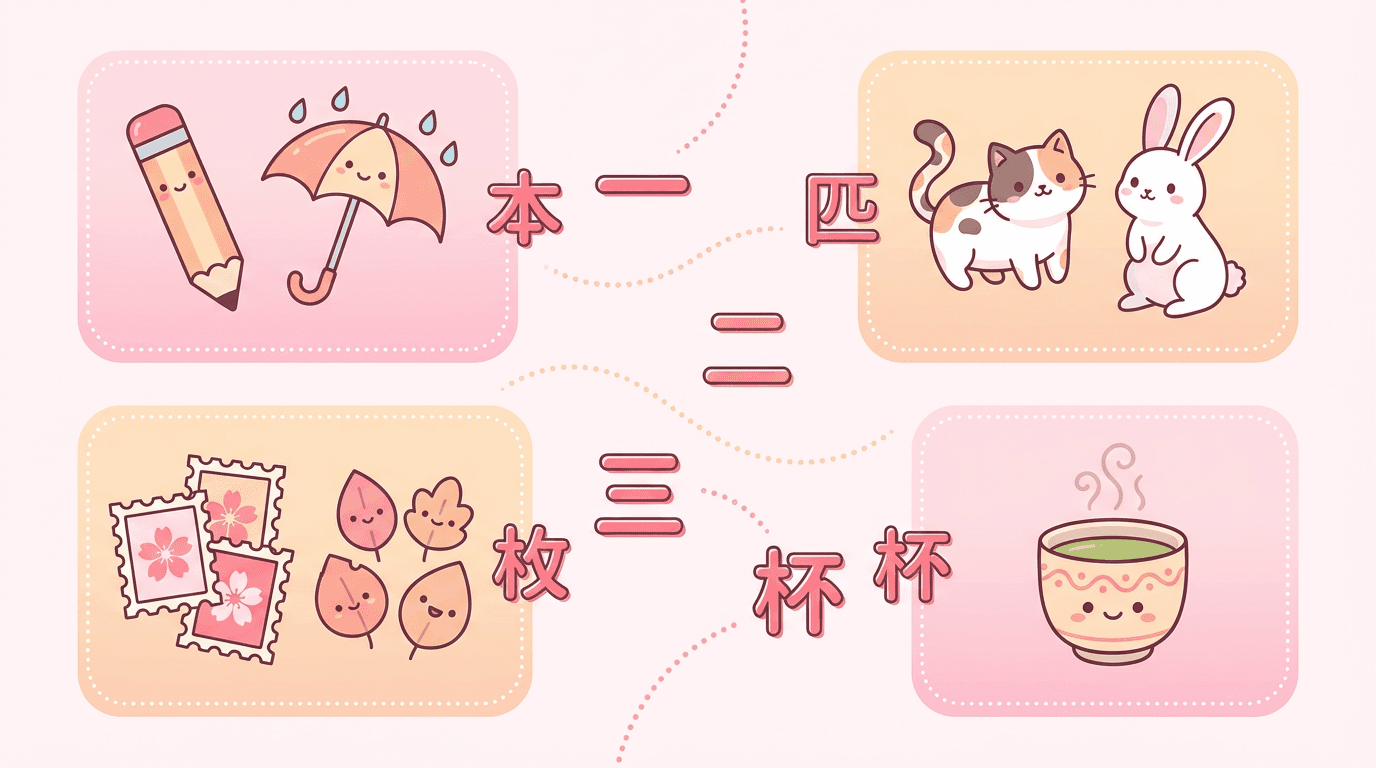
This is where Japanese numbers get interesting. You can't just say "three cats" — you need the right counter. Here are the ones you'll use most:
People (人 — nin/ri):
| Count | Japanese | Romaji |
|---|---|---|
| 1 person | 一人 | hitori |
| 2 people | 二人 | futari |
| 3 people | 三人 | san nin |
| 4 people | 四人 | yo nin |
| 5 people | 五人 | go nin |
Note: 1 and 2 people have special readings (hitori, futari) — not ichi nin or ni nin.
Long/Thin Objects (本 — hon/bon/pon): Used for pens, bottles, trees, roads, etc.
| Count | Japanese | Romaji |
|---|---|---|
| 1 | 一本 | ippon |
| 2 | 二本 | ni hon |
| 3 | 三本 | san bon |
| 4 | 四本 | yon hon |
| 5 | 五本 | go hon |
Flat Objects (枚 — mai): Used for paper, tickets, shirts, plates, etc.
| Count | Japanese | Romaji |
|---|---|---|
| 1 | 一枚 | ichi mai |
| 2 | 二枚 | ni mai |
| 3 | 三枚 | san mai |
Small Animals (匹 — hiki/biki/piki):
| Count | Japanese | Romaji |
|---|---|---|
| 1 | 一匹 | ippiki |
| 2 | 二匹 | ni hiki |
| 3 | 三匹 | san biki |
For a thorough look at counters and other essential vocabulary, check out our JLPT N5 Script Book.
Phone Numbers
Japanese phone numbers are read digit by digit, using the Sino-Japanese numbers. The dashes are read as の (no).
Format: 0X0-XXXX-XXXX (mobile) or 0X-XXXX-XXXX (landline)
Example: 090-1234-5678
- ぜろ きゅう ぜろ の いち に さん よん の ご ろく なな はち
- Zero kyuu zero no ichi ni san yon no go roku nana hachi
Key points:
- 0 is read as ぜろ (zero) or れい (rei) — ぜろ is more common for phone numbers
- 4 is read as よん (yon), not し (shi) — し sounds like 死 (death)
- 7 is read as なな (nana), not しち (shichi) — to avoid confusion with 1 (いち)
- 9 is read as きゅう (kyuu), not く (ku)
Addresses
Japanese addresses work from large to small: prefecture → city → ward/town → block → building number.
Example: 東京都渋谷区神宮前1-2-3
- とうきょうと しぶやく じんぐうまえ いっちょうめ にばん さんごう
- Toukyouto Shibuyaku Jinguumae itchoume niban sangou
Address-specific counters:
| Counter | Reading | Meaning |
|---|---|---|
| 丁目 | choume | block/district |
| 番 | ban | lot number |
| 号 | gou | building number |
Saying Your Age
Age in Japanese uses the counter 歳 (sai). Most numbers are straightforward, but watch out for irregular readings:
| Age | Japanese | Romaji | Note |
|---|---|---|---|
| 1 year old | 一歳 | issai | irregular |
| 8 years old | 八歳 | hassai | irregular |
| 10 years old | 十歳 | jussai | irregular |
| 20 years old | 二十歳 | hatachi | special word |
| 25 years old | 二十五歳 | ni juu go sai | regular |
How to ask: 何歳ですか?(Nan sai desu ka?) — How old are you? How to answer: 二十五歳です。(Ni juu go sai desu.) — I'm 25 years old.
Note: Asking someone's age directly can be considered rude in Japan, especially with older people or people you've just met.
Dates and Months
Months use the Sino-Japanese numbers + 月 (gatsu):
| Month | Japanese | Romaji |
|---|---|---|
| January | 一月 | ichi gatsu |
| February | 二月 | ni gatsu |
| March | 三月 | san gatsu |
| April | 四月 | shi gatsu |
| May | 五月 | go gatsu |
| June | 六月 | roku gatsu |
| July | 七月 | shichi gatsu |
| August | 八月 | hachi gatsu |
| September | 九月 | ku gatsu |
| October | 十月 | juu gatsu |
| November | 十一月 | juu ichi gatsu |
| December | 十二月 | juu ni gatsu |
Note: April is し gatsu (not yon), July is しち gatsu (not nana), and September is く gatsu (not kyuu).
Days of the month have many irregular readings, especially 1st-10th:
| Day | Japanese | Romaji |
|---|---|---|
| 1st | 一日 | tsuitachi |
| 2nd | 二日 | futsuka |
| 3rd | 三日 | mikka |
| 4th | 四日 | yokka |
| 5th | 五日 | itsuka |
| 6th | 六日 | muika |
| 7th | 七日 | nanoka |
| 8th | 八日 | youka |
| 9th | 九日 | kokonoka |
| 10th | 十日 | tooka |
| 14th | 十四日 | juu yokka |
| 20th | 二十日 | hatsuka |
| 24th | 二十四日 | ni juu yokka |
From the 11th onward (except the ones above), days follow a regular pattern: number + 日 (nichi). For example, 15th = 十五日 (juu go nichi).
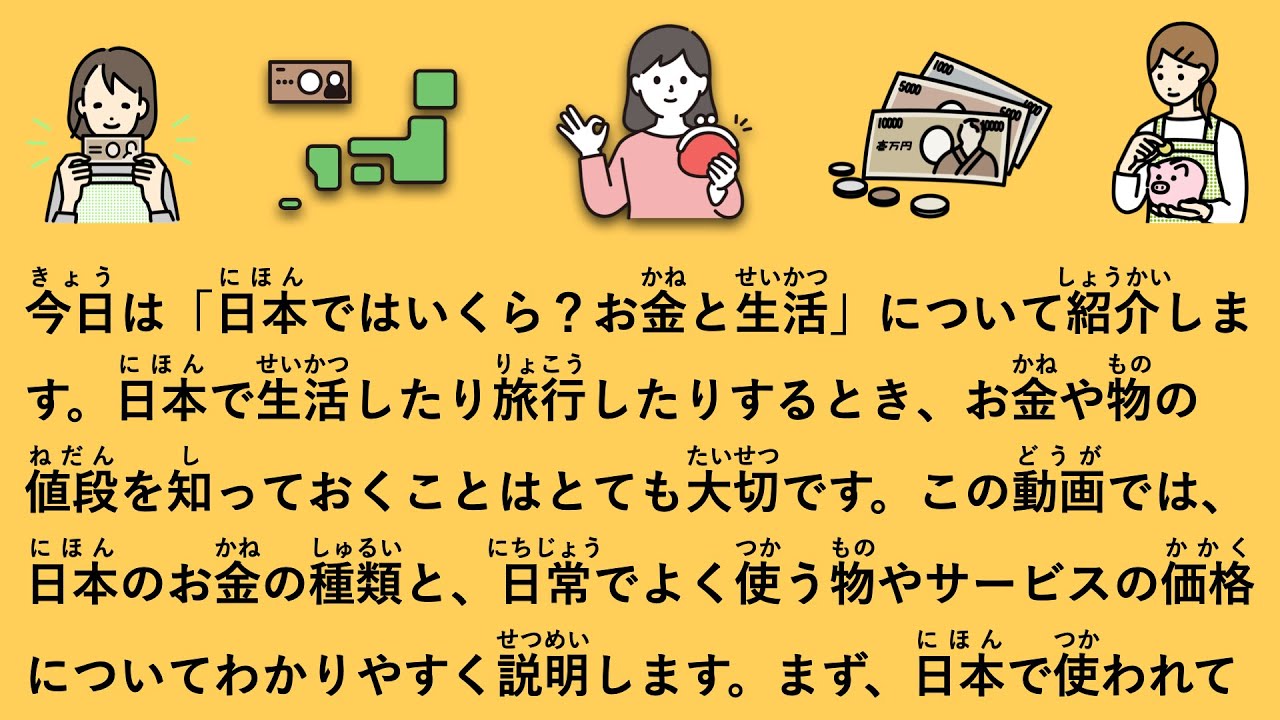
For more practice with numbers in everyday contexts, watch our YouTube lesson on money and daily life.
Example Sentences
| Japanese | Romaji | English |
|---|---|---|
| りんごを三つください。 | Ringo wo mittsu kudasai. | Three apples, please. |
| 家族は四人です。 | Kazoku wa yo nin desu. | There are four people in my family. |
| 電話番号は何番ですか? | Denwa bangou wa nan ban desu ka? | What's your phone number? |
| 私は二十五歳です。 | Watashi wa ni juu go sai desu. | I'm 25 years old. |
| 誕生日は三月十四日です。 | Tanjoubi wa san gatsu juu yokka desu. | My birthday is March 14th. |
| ペンを二本ください。 | Pen wo ni hon kudasai. | Two pens, please. |
| 切符を一枚買いました。 | Kippu wo ichi mai kaimashita. | I bought one ticket. |
| 猫が三匹います。 | Neko ga san biki imasu. | There are three cats. |
Common Mistakes
-
Saying いちにん instead of ひとり for "one person" — The counter 人 has special readings for 1 and 2 (ひとり, ふたり). From 3 onward, use the regular pattern (さんにん, よにん...).
-
Using し for 4 in phone numbers and floors — Use よん instead. し sounds like 死 (death) and is avoided in these contexts.
-
Forgetting irregular day readings — Days 1-10 have unique readings that don't follow any pattern. You just have to memorize them. 一日 (tsuitachi) catches everyone off guard.
-
Mixing up counters — Using 本 for flat objects or 枚 for people. Each counter has a specific category. When in doubt, use the native numbers (hitotsu, futatsu...) as a safe fallback.
-
Reading 二十歳 as にじゅっさい — While technically understandable, the traditional reading is はたち (hatachi). This is the standard way to say "20 years old."
Tips for Speakers of Other Languages
Learning Japanese numbers can feel different depending on your native language. Here are specific tips:
For Korean speakers (한국어 화자) Korean also has two number systems — native Korean (하나, 둘, 셋) and Sino-Korean (일, 이, 삼). This parallel is extremely helpful. Korean counters (개, 명, 장) work similarly to Japanese counters. Many Sino-Korean numbers sound similar to Japanese on'yomi readings (일=いち, 이=に, 삼=さん).
For Chinese speakers (中文母语者) Chinese number readings are similar to Japanese on'yomi. The 10,000-unit grouping (万) is identical. Your biggest challenge will be learning counters, which Chinese also has (个, 只, 张) but with different specific rules in Japanese.
For Vietnamese speakers (Người nói tiếng Việt) Vietnamese Sino-Vietnamese numbers (nhất, nhị, tam) share roots with Japanese numbers. Vietnamese also uses classifiers similar to Japanese counters. This conceptual overlap gives you a head start, though the specific counter words differ.
For Spanish speakers (Hablantes de español) Spanish numbers work very differently — no counters, no dual system, and numbers group by thousands rather than ten-thousands. The counter system will be the most foreign concept. Start with the 5 most common counters and use ひとつ/ふたつ as a fallback.
For Indonesian speakers (Penutur bahasa Indonesia) Indonesian has classifiers (e.g., buah, orang, ekor) that function similarly to Japanese counters. This conceptual familiarity helps. However, the irregular readings in Japanese (ひとり, ふたり, ついたち) are unique and must be memorized.
Real Learner Insights
Based on common patterns we see among Japanese learners:
- The "aha" moment: Many learners report that counters stop feeling overwhelming when they realize ひとつ/ふたつ works as a universal fallback. You don't need all counters from day one — the native counting system covers most casual situations.
- Common confusion point: It's completely normal to freeze when trying to say a date in Japanese. Even intermediate learners hesitate on irregular day readings like ついたち (1st) and はつか (20th). Practice saying dates every single day until they become automatic.
- What works: Learners who count real objects around them daily ("three books = 三冊, two pens = 二本") internalize counters much faster than those who only study from lists.
Practice Tips
-
Count everything around you — See three books on your desk? Say 三冊 (san satsu). Two pencils? 二本 (ni hon). Make it a daily habit.
-
Practice phone numbers — Say your own phone number in Japanese every morning. Then try saying friends' numbers too.
-
Learn dates by using them — Say today's date in Japanese every day. "Today is 三月十二日" — do this until it's automatic.
-
Focus on 5 core counters first — Master 人, 本, 枚, 匹, and 個 before learning more. These cover most daily situations. Our JLPT N5 materials have all the essential counters.
-
Watch real-life number usage — Our YouTube lessons feature numbers in context — ordering, giving directions, and more. Hearing them used naturally helps the readings stick.
Frequently Asked Questions
Q: Do I really need to memorize all the counters? Not all at once. Start with the 5 most common ones (人, 本, 枚, 匹, 個) and the native counting system (hitotsu, futatsu...). You can always fall back on the native numbers when you don't know the right counter — Japanese people will understand you.
Q: Why does 4 have two readings (shi and yon)? し (shi) is the original Sino-Japanese reading. よん (yon) is preferred in most modern contexts because し sounds like 死 (shi, death). You'll hear よん for phone numbers, floors, and ages, but し in fixed words like 四月 (shigatsu, April).
Q: How do you count large numbers in Japanese? Japanese groups numbers in units of 10,000 (万, man) instead of 1,000. So 100,000 is 十万 (juu man, "ten ten-thousands"), and 1,000,000 is 百万 (hyaku man, "hundred ten-thousands"). This is one of the trickiest adjustments for English speakers.
Q: What's the difference between 個 and the native counting system? 個 (ko) is a Sino-Japanese counter for small, compact objects (eggs, erasers, balls). The native system (hitotsu, futatsu...) works as a general-purpose counter and can replace many specific counters in casual speech. 個 is more precise, but ひとつ/ふたつ is never wrong.
Q: How do I say the year in Japanese? Use the number + 年 (nen). 2026 is 二千二十六年 (ni sen ni juu roku nen). Japan also uses the imperial era system — 2026 is 令和8年 (Reiwa hachi nen).
Q: Is the Korean number system similar to Japanese? Very similar. Korean has both native and Sino-Korean numbers, and uses counters just like Japanese. Sino-Korean numbers (일, 이, 삼) sound close to Japanese on'yomi (いち, に, さん), making them easier for Korean speakers to learn.
Q: Do Chinese speakers find the 万 (ten-thousand) grouping natural? Yes, because Chinese uses the same 万 grouping. English speakers struggle with converting between thousands and ten-thousands, but Chinese speakers can process Japanese large numbers naturally.
Related Resources
- YouTube: Money and Daily Life — numbers used in real-world spending and budgeting
- YouTube: Giving Directions — practice number-related vocabulary for addresses and routes
- JLPT N5 Script Book — all essential numbers and counters for beginners
- JLPT N4 Script Book — expand to more advanced counters and number expressions